Feeling Lost? -Why Information is Key
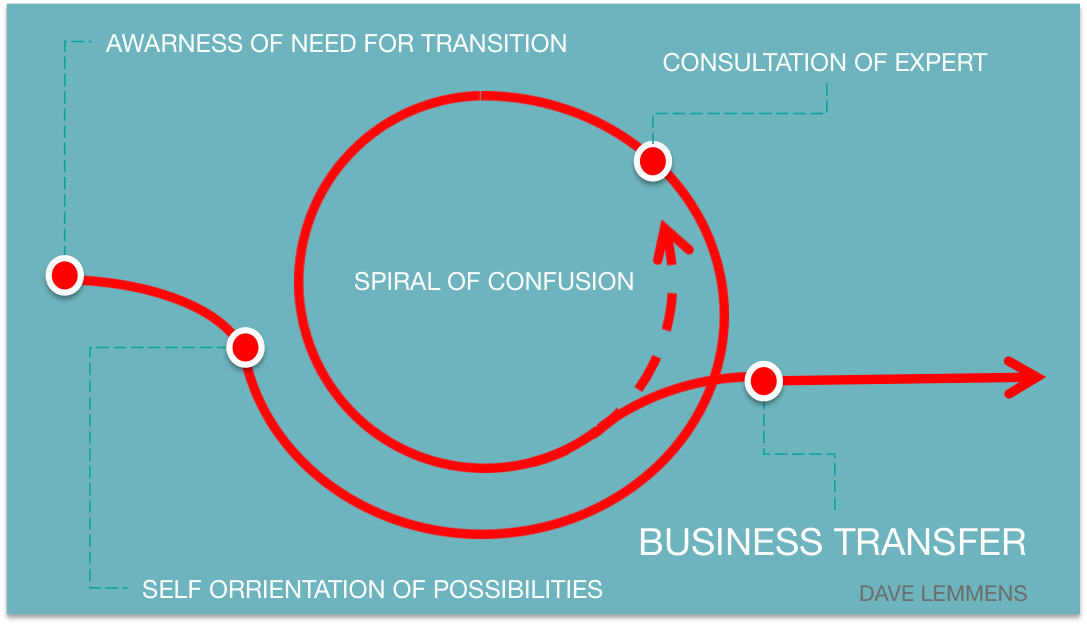
Each business owner or manager will face the point at which he or she needs to start planning his succession. This so-called business succession issue is a major point of interest within the European Union, as it affects the backbone of the European economy, the Small and Medium sized Enterprises (150,000 SMEs fail each year in finding a successor). In this situation, the business owner will become aware of its need for succession. Hence, the path to business transfer has started.
During this phase, the business owner tries to find likely possibilities for a business transfer. Having information available is a key element in this phase, but why? The answers are rather obvious; save money, save time and make better informed decisions. Saving time and money sounds good, though, the question is how this works?

The challenge for Financial Participation in businesses
The issue of employees participating in the financial results of their company has become an important political issue across the European Union. It is seen as a mean of promoting greater co-operation between management, owners and employees, eventually leading to a reduction in workplace conflict and, Read More…
Social inequality in Germany – need for action
In the last decade social inequality in Germany has been rising significantly due to reforms of welfare state and labour market policy. Today, as economic crisis seems overcome, employers estimate compensation for their contribution in fighting recession.
As a result of moderate economic growth in the beginning of millennium Germany witnessed high unemployment rates and exploding Read More…
Employees becoming co-owners, that´s the aim of EFP – says Prof. Verheugen
´The final aim is that the employees become co-owners,´ said Prof. Verheugen, former vice-president of the European Commision in Mai 2011 at the press conference at the European Univerity Viadrina in Frankfurt (Oder), Germany. He considered the EFP-model presented at the EFP-conference by Prof. Lowitzsch and his colleagues as the best model on the market so far and it should become the basis of the future legislation in Germany.
Watch the highlights of the press conference with:
Prof. Günther Verheugen – former Vice-President of the European Commision, Professor at the European University Viadrina
Prof. Jens Lowitzsch – Professor at the European University Viadrina
Alexander Graf von Schwerin – Rapporteur of the own initiative opinion SOC371/2010 on EFP of the European Economic and Social Committee
Reasons for Introducing EFP – Improving Working and Living Conditions of Employees
‘To stick to wages alone is to maintain a permanent class struggle,’ said Charles de Gaulle. Building ownership of productive assets into a nation’s own working families makes good freemarketsense. The financial crisis engulfing our world is, at bottom, a consumption crisis. It is brought on by too little money in the pockets of those who are eager to buy the goods and services merchants are eager to sell and producers to supply. Once investment capital had to be painfully hoarded from savings squeezed from current consumption. EFP schemes are often seen as one solution to the above mentioned problems of industrial societies and Read More…
Reasons for Introducing EFP – Higher Productivity and Better Competitiveness for Companies
The issue of employees participating in the financial results of their company has become an important political issue across the European Union. It is seen as a mean of promoting greater co-operation between management, owners and employees, eventually leading to a reduction in workplace conflict and, consequently, increasing efficiency, productivity and flexibility. Several reports conducted at the EU level have highlighted the potential benefits of financial participation, which have also been corroborated by a large number of empirical studies.
The resultant growth of productivity and profits creates the potential for a “win- win” situation, Read More…
The Effect of Risk in SME Profit Sharing
Some of the effects of profit sharing schemes are that they, for example, can decrease the amount of income fluctuation and increase the income of both employer and employee. The employer and, in the case of a Small and Medium Enterprise (SME), the owner and entrepreneur, is most of the times, if not always, the key-person on taking the decision of implementing a profit sharing scheme.