197 Words intro on Leveraged ESOPs
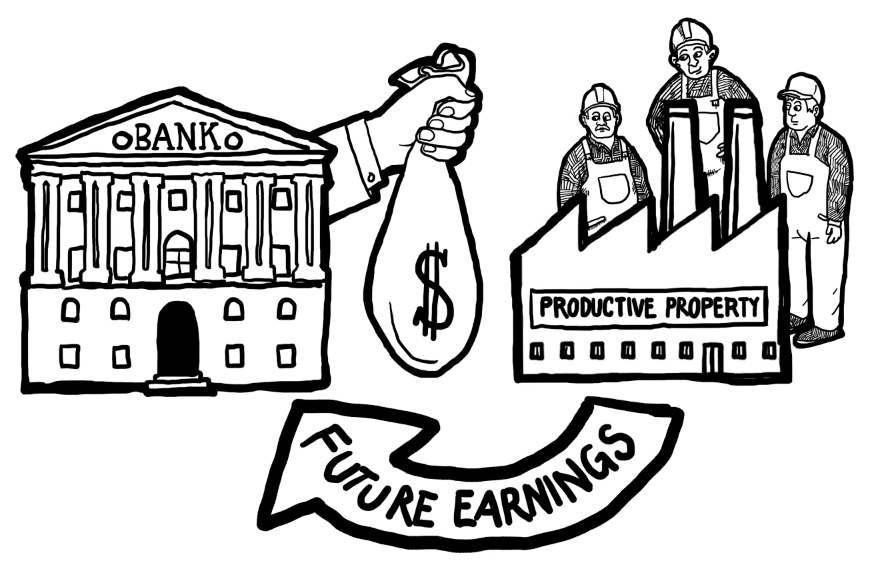
Leveraged ESOPs are generally seen as complex systems but in reality it is more about confusion and not knowing how things work. This short article will give an introduction to the leveraged ESOP as developed by Louis O. Kelso back in 1958.
The leveraged ESOP allows employees to become owners of the company by obtaining shares through the ESOP plan. The shares are bought from a loan that the company takes and not by private funds of the employees. A key point, allowing all employees to become owners of the company they work for – this was an aim of Kelso.
The advantages of the company taking the bank loan for an ESOP are clear:
- The company will get a bank loan more easily in comparison to employees because of the guarantees that the company can give.
- The loan can be paid back by future earnings (for example: dividends).
- All employees are able to participate no matter what their financial background is.
- Employee participation in general provides more employee motivation and allows for a sustainable business succession.
Though, to prevent differences between employees that join at different points in time, holding periods and other rules need to be made.
An interesting article for further reading on employee motivation by the use of ESOPs can be found under: lifehealthpro.com
Do you have an interesting article you want to share with us?
Contact us at: contact.proefp [at] googlemail.com or connect on Twitter via:@ProEFP

Infographic: ESO in Europe
Infographic: ESO in Europe

source: European Company Survey 2009
Do you have an interesting article you want to share with us?
Contact us: contact.proefp [at] googlemail.com or connect on Twitter:@ProEFP
Best Practice: Gore and Associates
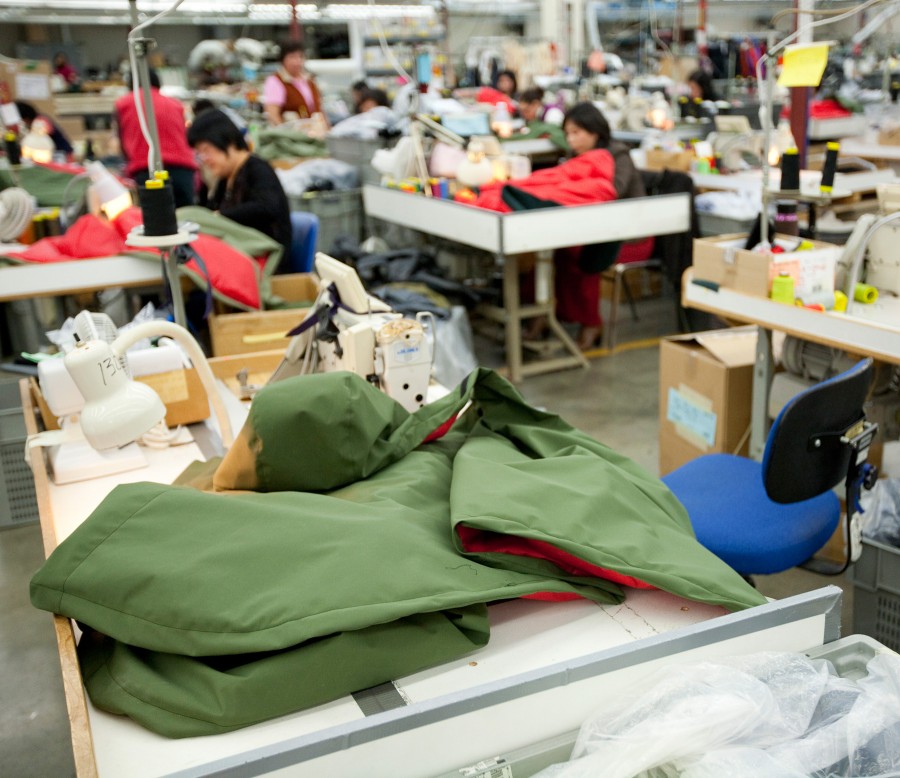
As Gore says themselves: „we have more than 10,000 employees, called associates.“
This, at a first glance, small difference in wording originates from the concept of a latice organizational culture and is in fact having a major impact on the corporate culture and performance of Gore. Every employee at Gore is indeed sharing in the corporate success via the ownership of stocks. A central element, the so-called Associate Stock Ownership Plan, allows the associates to do so. This gives Gore and its associates multiple benefits, among which:
- Opportunities to build up financial security for retirement.
- Improving performance by giving the employees the feeling of being a co-owner of the company that they work for.
Also see Forbes’ Article: Four Ways To Get Your Employees To Care Like Owners http://t.co/kZx0TVg6LZ
It is not without reason that Gore becomes well ranked in various overviews for best companies to work for. Even better, this does not only hold for the US based facilities, but also for most of their worldwide facilities.
Click here to keep reading about Gore as a best practice!
Selected Articles: Why more employee ownership is needed! (from: US News)
We found this interesting US News article on why more employee owned businesses are needed. The article is perfectly describing the similarities and differences between employee and non-employee owned companies.
David Brodwin, the author, points out that: “A truly sustainable economy needs more employee-owned businesses and partnerships.”
He also makes an important point by claiming that: “These businesses stabilize consumer incomes and spending power, stabilize employment, stabilize corporate cash flows, and blunt the extremes of the business cycle. For this to happen we’ll need to find ways to attract more capital into the field, to finance the conversion of existing investor-owned businesses to a new ownership model.”
Employees becoming co-owners, that´s the aim of EFP – says Prof. Verheugen
´The final aim is that the employees become co-owners,´ said Prof. Verheugen, former vice-president of the European Commision in Mai 2011 at the press conference at the European Univerity Viadrina in Frankfurt (Oder), Germany. He considered the EFP-model presented at the EFP-conference by Prof. Lowitzsch and his colleagues as the best model on the market so far and it should become the basis of the future legislation in Germany.
Watch the highlights of the press conference with:
Prof. Günther Verheugen – former Vice-President of the European Commision, Professor at the European University Viadrina
Prof. Jens Lowitzsch – Professor at the European University Viadrina
Alexander Graf von Schwerin – Rapporteur of the own initiative opinion SOC371/2010 on EFP of the European Economic and Social Committee
Reasons for Introducing EFP – Improving Working and Living Conditions of Employees
‘To stick to wages alone is to maintain a permanent class struggle,’ said Charles de Gaulle. Building ownership of productive assets into a nation’s own working families makes good freemarketsense. The financial crisis engulfing our world is, at bottom, a consumption crisis. It is brought on by too little money in the pockets of those who are eager to buy the goods and services merchants are eager to sell and producers to supply. Once investment capital had to be painfully hoarded from savings squeezed from current consumption. EFP schemes are often seen as one solution to the above mentioned problems of industrial societies and Read More…
Reasons for Introducing EFP – Higher Productivity and Better Competitiveness for Companies
The issue of employees participating in the financial results of their company has become an important political issue across the European Union. It is seen as a mean of promoting greater co-operation between management, owners and employees, eventually leading to a reduction in workplace conflict and, consequently, increasing efficiency, productivity and flexibility. Several reports conducted at the EU level have highlighted the potential benefits of financial participation, which have also been corroborated by a large number of empirical studies.
The resultant growth of productivity and profits creates the potential for a “win- win” situation, Read More…